











Expert comment
jon.wallace
The current focus on ‘global imbalances’ is too easily used by policymakers as a smokescreen for their own domestic failings.
Global imbalances are back on the international finance agenda this year, prompting a flagship G7 report and creating discord at the G20 finance minsters’ summit.
Seemingly this focus on global imbalances is justified. China’s trade in goods surplus now alarms Europe’s leaders as much as it worries America’s. The US’s net liability to the world – the degree to which its overseas borrowing exceeds its overseas investments – reached an astonishing 70 per cent of US GDP in 2025. The last time global imbalances were this prominent was just ahead of 2008’s Global Financial Crisis.
What a shame, then, that this focus is so misguided. Imbalances are a feature of the global financial system, not a bug. They arise from saving and investment decisions, allowing diversification and dispersing risk in the process. In truth, ‘global imbalances’ are not primarily a global phenomenon. They are simply the product of all the world’s domestic imbalances added up.
And because foreign investment is more mobile than domestic investment, it is more likely to punish bad domestic policymaking by moving elsewhere. The result is to impose discipline – constraints – on political choices.
There is a generous interpretation of the motives for the current focus on global imbalances. It is possible that simultaneous domestic reforms across the global economy would make fixing economic issues at home easier for everyone.
But the tone and outcomes at the G20 minsters’ summit invite a less generous conclusion; that some governments are attempting to dress up their domestic policy failings as the result of foreign actions.
A problem shared
For all the hand-wringing that global imbalances generate, you could be forgiven for forgetting that they reflect the global economy operating as it should.
International risk-sharing is a primary benefit of economic openness. Take the US as an illustration. Its net liability of 70 per cent of GDP certainly looks eye-popping and far outstrips the biggest surpluses elsewhere. But look closer at what’s going on.
First, the US issues the world’s reserve asset, US Treasuries. These are the global saving instrument of choice because they are safe, underpinned by a huge economy and the rule of law, and highly liquid – making them easy to buy and sell.
Second, the US economy has outperformed the rest of the world in recent years, driven by its tech boom. Put simply, investment opportunities in the US outstrip US saving.
Far from being a nefarious ‘transfer of wealth’ out of the US, this is exactly how the global financial system is supposed to work. The US economy has generated huge investment opportunities.
The world has open capital accounts to diversify risk: non-Americans can diversify away from risky or sluggish domestic assets to high-performing American ones. Americans don’t have to bear all the risk, because the rest of the world is putting money in too. This is textbook, win-win international risk-sharing.
And it illustrates a deeper point. Global imbalances don’t arise because of global phenomena. Rather, they arise because of domestic choices about saving and investment. Global imbalances are just the sum of these domestic imbalances.
No free lunches
Sharing risk and eliminating risk are not the same thing. Openness brings its own challenges, most obviously that overseas investors are ‘flightier’ – that is, more likely to swiftly withdraw investment – than domestic investors. They don’t have a ‘home bias’, are not engaged in domestic political choices, and may worry that, as foreign nationals, legal protections for their investments are less robust.
Do these flighty investors and global imbalances presage a rerun of the Global Financial Crisis? No. That crisis was caused by lax financial standards in Europe and the US, not the fabled ‘Global Savings Glut’.
Even today’s huge US net liability looks robust. US liabilities are in dollars. Its assets are in foreign currency. So, if investors rebalance away from the US, the dollar depreciates. That raises the (dollar) value of US external assets, stabilizing the overall external position. That’s risk-sharing in action.
Instead, putting together foreign investors and domestic imbalances should have a disciplining effect. In response to bad policymaking, foreign investors can start to take their money elsewhere, lessening the likelihood of policymakers making bad domestic choices.
Fundamentally, ‘global imbalances’ are most interesting for what they tell us about domestic decision-making. And today’s imbalances are flagging genuinely questionable choices by national governments.
The US government, for instance, spends too much borrowed money. At nearly 125 per cent of GDP, the US government’s gross debt is greater than the US’s entire external liabilities (or what it collectively owes the world). US Treasury yields have been rising, prompting exotic policy responses and putting pressure on the unsustainable US fiscal position.
Europeans, meanwhile, aren’t creating investment opportunities. Their savings are therefore flowing to where returns are more attractive – especially US AI investment. That lack of investment has allowed competitiveness to erode, leaving Europe falling further behind the US and vulnerable to Chinese competition.
At the same time, China spends too little. It funnels its savings into excessive investment, inflating asset bubbles and depressing consumption. After its housing bubble collapsed, exports surged but demand – including for imports – has remained feeble, alienating other major economies.
In each case the appropriate domestic policy prescription is obvious – but the political will is lacking.
Stones and glasshouses
The great hope, eloquently made by Hélène Rey, is that, by linking these individual challenges, a broad common interest might emerge and lead to positive simultaneous action, either through persuasion or peer pressure. Any fiscal consolidation enacted by the US, for instance, could be offset by rising investment in Europe and consumption in China. That would make the economics of adjustment easier. And, with everyone acting together, it could make the politics of adjustment easier too.
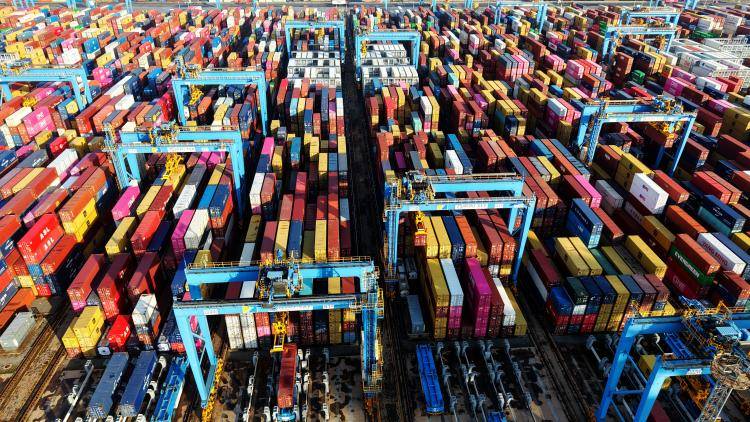
Unfortunately, a less positive motive for the recent focus on imbalances is also possible. To the untrained ear ‘global’ imbalances sound like a global problem. And blaming overseas developments for domestic problems is a seductive narrative in political discourse. Indeed, it can already clearly be observed through easily falsified claims that imports steal jobs, or that a reserve currency issuer must run deficits. And it can be seen in poorly targeted policies like tariffs, which do nothing to address the underlying issues.
And recent international meetings confirm that global policymakers are failing to take ambitious, simultaneous action. For instance, rather than leading by example, the G7 failed to agree either fiscal consolidation in the US or accelerated structural reform in Europe. Instead, they punted the issue to August’s G20 finance ministers’ summit, which then failed to agree on a communiqué. The language that emerged in the ‘chair’s statement’ was noticeably tougher on surplus countries than on deficit countries. And the US was not shy about blaming China for the failure to reach agreement.
Global imbalances are not in themselves an imminent risk. Rather, they are a credible early warning signal of domestic problems. By placing so much emphasis on the global dimension and failing to follow through with credible action, policymakers risk undermining the case for difficult domestic reform, rather than advancing it. As the unfashionable Washington Consensus used to have it, the key to prosperity is putting your own house in order, not casting stones at your neighbours.